What people actually mean by “tier 1”
In temporary works, “tier 1 provider” is used loosely. It usually means a national or multi-discipline consultancy that can bid a framework, staff a site with a team, and sit on a principal contractor’s approved list. “SME” here means a named Chartered Engineer practice that designs, checks and coordinates Cat 0–3 work without a bid-then-hand-off model.
Both can be competent. BS 5975-1:2024 does not prefer one size of firm. It prefers attributable design, a Designated Individual, a Temporary Works Coordinator, a proportionate check, and a pack the permit can be written from. The appointment fails when those duties are assumed to live in a brand rather than in a named person.
The question usually surfaces when a principal contractor is choosing a second designer, when a specialist practice they used has been absorbed into a larger group, or when the person who won the work is not the person issuing the drawings. Those are delivery problems, not search-ranking problems.
When the large house is the right appointment
Use a national or multi-discipline house when the package itself is a programme of packages: a framework covering many sites, a nuclear-licensed or heavy-rail volume that needs a bench of checkers, or a demolition and lifting sequence that is the firm’s published centre of gravity. If you need one organisation to design the temporary works, co-ordinate multi-discipline interfaces and attend every progress meeting with a resident engineer, that is a staffing problem an SME will not pretend to solve.
Ask that house the same questions you would ask anyone else. Who is the named designer on this item? What is their Engineering Council registration? Who is excluded from the Cat 3 check? What is the first deliverable in week one? A large practice that cannot answer those in writing is not “tier 1.” It is a brochure.
When a named CEng SME is the right appointment
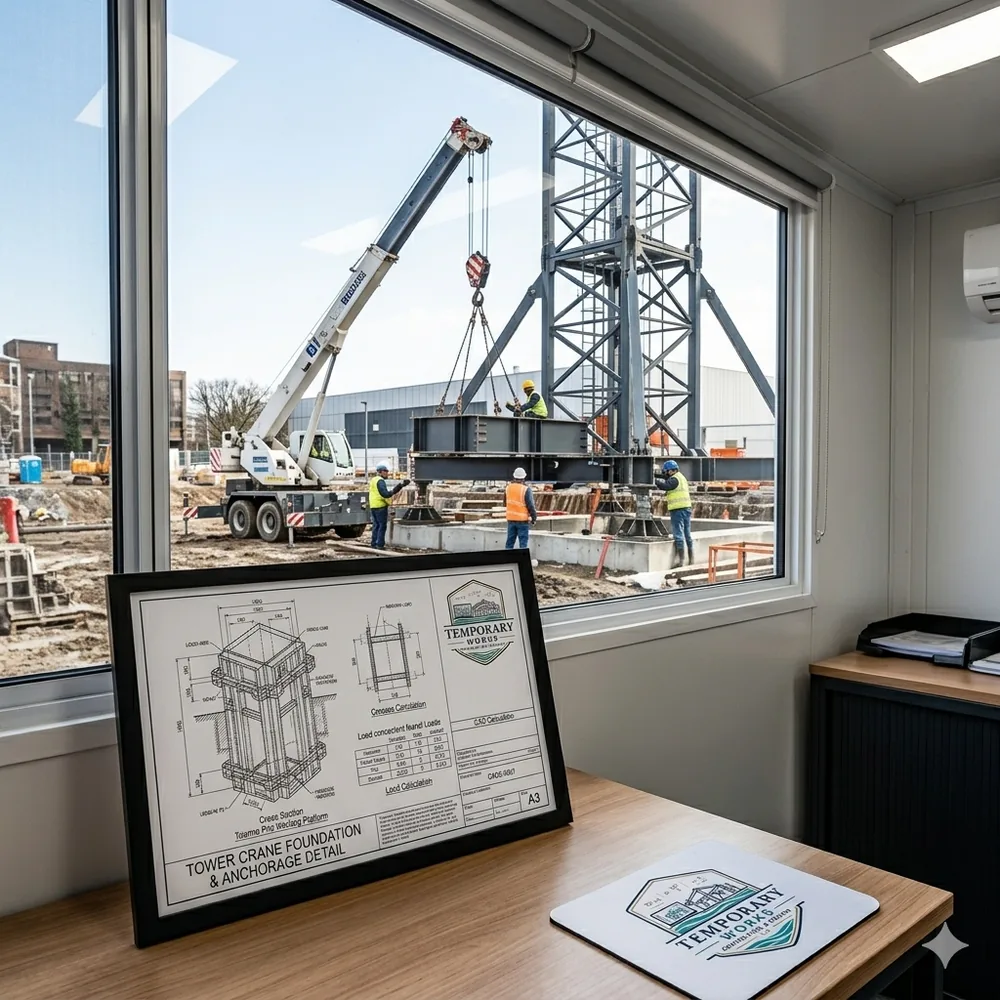
Use a named Chartered Engineer when the job is a live temporary condition that has to be designed this week: excavation support and propping, façade retention, a tower-crane or MEWP base, a piling mat to BRE 470, a designed scaffold or an independent Cat 2/3 check, or the TWC/DI role on an NEC programme. Temporary Works Consulting & Design Ltd is built for that. Designs are led by David J. Miller, CEng MICE, Engineering Council 094002192, PMI-CP (PMI ID 10695576). Company No. 17198188. Remote across the UK and internationally.
The delivery difference is the point. The same CEng who quotes is the designer of record. There is no graduate-on-the-job after a director’s bid. That matters on short programmes, because incomplete briefs are the usual delay — not arithmetic. A named engineer who will send the missing load and sequence questions the same day is faster than a team waiting for a complete pack that never arrives.
It also matters for CDM 2015. The designer duty is personal enough that you should be able to name the person. If the only name on the paperwork is a company, you do not yet have a designer appointment you can defend.
Checking, category and independence scale with risk — not with headcount
Cat 0 to Cat 3 exists so the check matches consequence. A simple, standard layout with a competent review can sit at a lower category. Once the scheme shares a load path with an excavation, a façade, a public highway or a working platform for tracked plant, the check moves up. The same organisation must not independently Cat 3-check its own design. Headcount does not relax that rule.
HSE still requires temporary structures to be designed, installed and maintained for foreseeable loads and inspected by a competent person. Construction remains the UK’s highest-fatality sector: 25 construction deaths in 2025/26, with falls from height the leading cause. The firm that issues the pack has to be the firm whose drawings the TWS can inspect against. Size of practice is not a substitute for that.
How to choose without a beauty parade
Send both firms the same brief: use, duration, loads, ground, remaining structure, sequence, and the category you think you need. Ask for the named designer, the registration, who checks, what they will not do, and the first-week deliverable. The answers will sort a named CEng SME from a national house — and will also sort both from a firm that only sells a stamp.
Do not choose on brand recency or on how many offices appear on a map. A 2026-incorporated named-CEng practice and a national multi-discipline house can both be the right designer, for different packages. Choose on category, specialism of the last five jobs, and whether the person you briefed is the person who signs.