
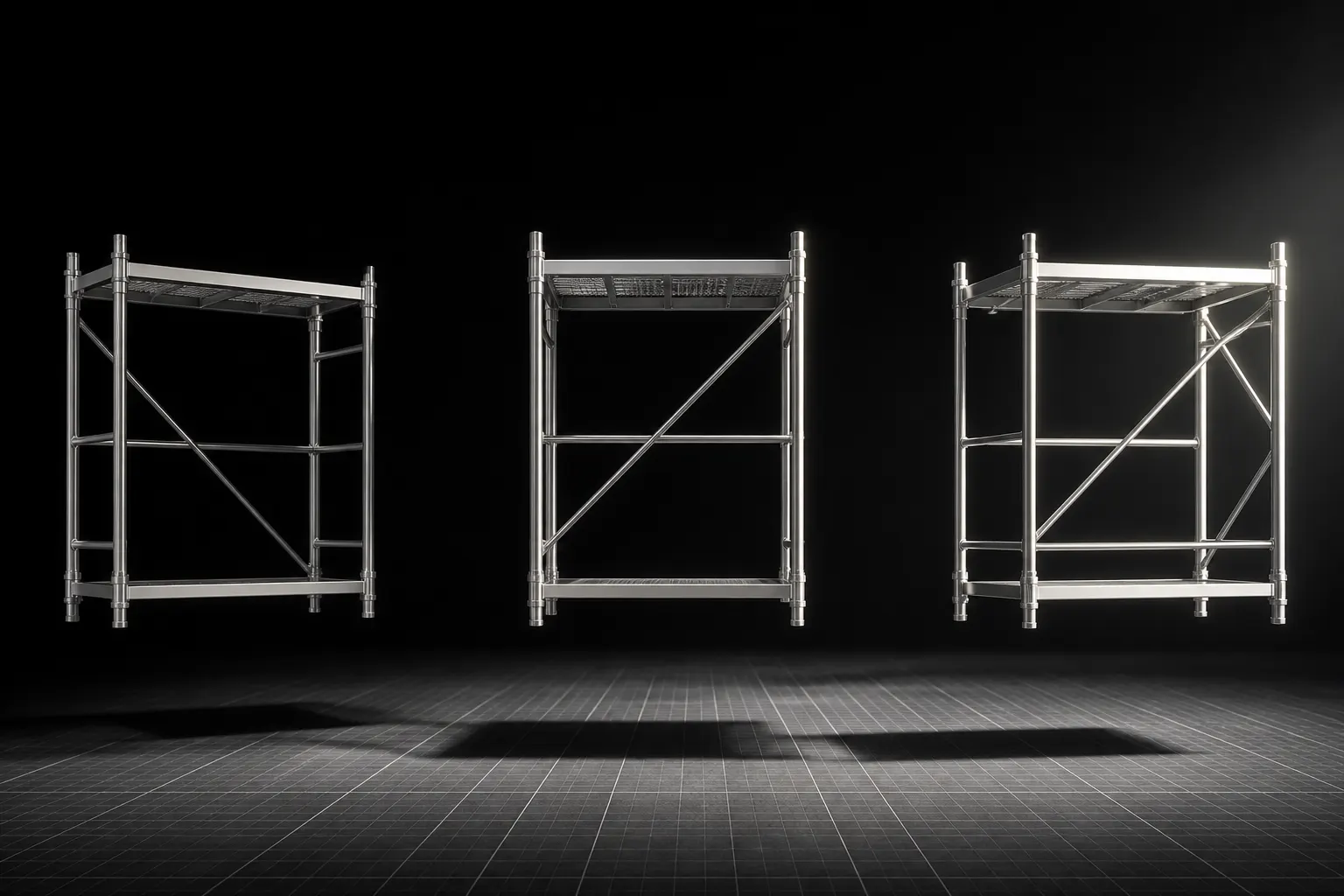
What scaffold design checking is
Scaffold on a live job is temporary works. It carries people, materials and wind, and it often shares a load path with excavation support, propping, a loading bay or a hoist. Under CDM 2015, designers must eliminate or reduce foreseeable risk so far as is reasonably practicable. The Health and Safety Executive is explicit that any temporary structure must be designed, installed and maintained to withstand the loads that may be imposed on it, and inspected by a competent person. Checking is how that duty is evidenced — not a visual once-over, and not a certificate produced without reading the brief.
This service is an independent-style design check of a scaffold scheme. David J. Miller, Chartered Civil Engineer, reviews the use, the calculations or layout, the ties, the ground or roof bearing, and the loads the scaffold is actually being asked to take. The check is scaled to risk under BS 5975: Cat 1 for simple designed schemes, Cat 2 where the arrangement is more complex, and coordination of a Cat 3 third-party check where the consequence of failure is high. The output is a record the Temporary Works Coordinator can file against the register item before the scaffold is loaded.
The check is not a substitute for the scaffold contractor’s erection quality, handover or inspection regime. It is the engineering review of whether the scheme, as drawn and as specified, is adequate for the brief. If the brief is incomplete — missing imposed loads, missing wind exposure, missing interface with a façade or an excavation — that is raised before the check is signed, because an unchecked assumption is how scaffold failures start.
Who the check is for
The typical client is a principal contractor or scaffold contractor who already has a layout, a design note or a supplier pack, and needs a named Chartered Engineer to check it. Temporary Works Coordinators use the service when the register shows a designed scaffold that cannot sit as Cat 0, or when the designer of the scaffold is the same organisation that would otherwise self-check. Project engineers use it when the scaffold is the interface — tying to a frame that is still being altered, spanning an excavation, or carrying a loading bay next to a public highway.
Work is delivered remotely from the UK and used on sites across the country and overseas. You send the brief, the drawings and what you already have. The check comes back as comments, a mark-up and register wording — at site pace, not at consultancy-report pace.
Who it is for
- Principal contractors who need a competent check before a designed scaffold is loaded
- Scaffold contractors issuing a scheme that sits outside a standard solution
- Temporary Works Coordinators holding the register and the permit-to-load
- Project engineers coordinating scaffold with excavation, propping or a hoist
Methodology
- 01
Brief and category
Confirm the use, duration, environment, imposed loads and the check category the risk justifies under BS 5975-1:2024. Incomplete briefs are returned with the questions that must be answered before a competent check can be given.
- 02
Load path
Review ties, standards, ledgers, transoms, bracing, and ground or roof bearing. Special features — loading bays, fans, bridging, birdcages, protection fans, hoist interfaces — are checked against the loads they will actually see, not a generic layout.
- 03
Interface with the works
How the scaffold meets excavation support, propping, façade retention or the permanent frame. Clashes with the lift envelope, the public highway and other temporary works are called out so the register items stay coordinated.
- 04
Residual risk and permit
What the site team must inspect, what must not be altered, and what the permit-to-load depends on. The check is written so a Temporary Works Supervisor can use it on the lift, not so it sits unread in a folder.
What you receive
- Check comments or check-certificate input at the agreed category
- Marked-up drawings and residual-risk notes
- Register wording for the Temporary Works Coordinator
- Optional RAMS and ITP comments where the method is part of the risk