
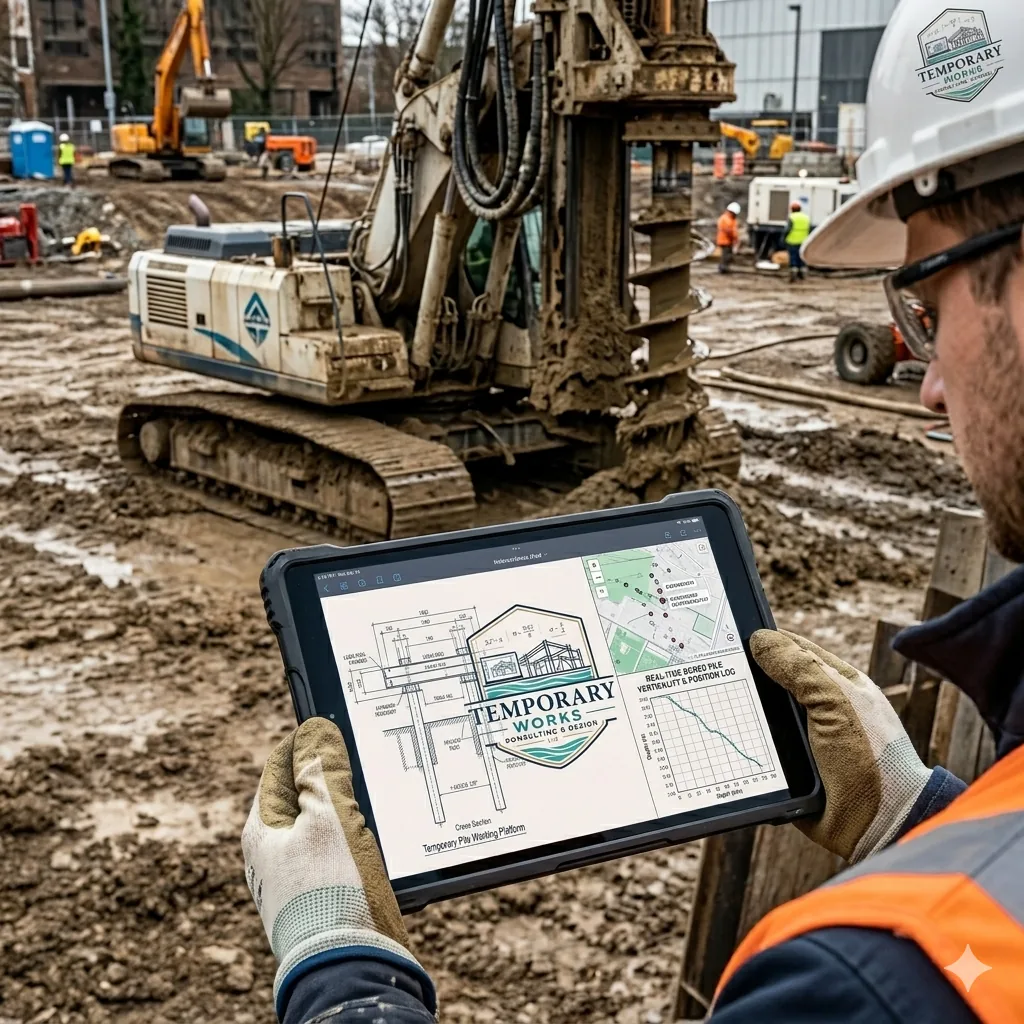
What temporary works management is
Temporary works management is the system that sits around the drawings: who is the Designated Individual, who is the Temporary Works Coordinator, what is on the register, what check category each item needs, and what must happen before it is loaded. BS 5975-1:2024 is the management-procedures part of the standard BSI published on 25 February 2025, when the former BS 5975:2019 was split into procedures (Part 1) and falsework (Part 2). Contractors who are still running a 2019 procedure are already behind the document the industry now cites.
This service sets up or repairs that system. David J. Miller, Chartered Civil Engineer and Temporary Works Designer, produces a procedure, a register the site can keep current, role guidance for DI, TWC, TWS and designers, and hold points that match how the job is actually built. The aim is not a thick quality-manual chapter. It is a control scale from Cat 0 to Cat 3 that a supervisor can explain, and a permit-to-load that means something.
HSE recorded 25 construction deaths in 2025/26 and continues to state that temporary structures must be designed, installed and maintained for foreseeable loads. Management failures — items missing from the register, checks that were never commissioned, methods that do not match the design — are how those loads arrive without a scheme. CDM 2015 does not name “TWC”, but it does require planning, competence and control of the construction phase. BS 5975 is how UK contractors normally demonstrate that for temporary works.
Who it is for
Principal contractors building data centres, substations, overhead-line compounds, structural alterations and hoardings use this when the project needs a temporary works system that will survive the first progress meeting. Designated Individuals use it when the company procedure must be updated to the 2024 parts or when a new TWC is being appointed and the register is a spreadsheet with no owners. Temporary Works Coordinators use retained weekly support when the live list of items is moving faster than the design supply.
Support is remote: procedure and register issued, then virtual audits using photographs, records and a structured walk-round. Site visits are arranged where the risk justifies them. The related on-domain tools — Temporary Works Toolbox and the SHEQ System — are what the team can run day to day once the procedure exists. A weekly retainer is available when the live list of items is moving faster than one-off quotes can keep up: new briefs, check coordination, and a short written steer before the next permit is signed.
Who it is for
- Principal contractors who need a procedure the site will run, not a manual nobody opens
- Designated Individuals who must appoint TWCs and keep the company system current after the 2024 split
- Temporary Works Coordinators inheriting a thin register on a live job
- Clients and project managers who want evidence that temporary works are actually controlled
Methodology
- 01
Procedure
A BS 5975-1:2024 procedure sized to the organisation: Designated Individual, appointments, design brief, check categories, permits, inspections, changes and close-out. Written so it can be issued as the company or project document, not as a slide deck.
- 02
Register and categories
A live register structure: item, designer, checker, category, permit, inspections. Cat 0 to Cat 3 is applied to the actual risk, so simple standard solutions are not over-processed and high-consequence items are not left as self-checks.
- 03
Roles and competence
Clear duties for DI, TWC, TWS, TWD and the design checker. Appointment wording and what “competent” means on this job — including where CITB TWC/TWS training sits relative to the Chartered Engineer doing the design.
- 04
Audit and hold points
Virtual or on-site audit against the register: what is built versus what was issued, which permits are real, which inspections happened. Findings are ranked so the TWC can act this week.
What you receive
- BS 5975-1:2024 procedure and role guidance
- Register template and first-load of known items
- Permit, inspection and ITP hold-point set
- Virtual audit report with ranked actions, when commissioned